How Long Does It Take to Crochet a Baby Blanket?
A 30 × 35 inch stroller blanket in worsted yarn and double crochet takes most people 18 to 30 hours. At an hour a day that is three to four weeks. At a couple of evenings a week it is two months.
The range is wide because speed varies enormously between people, and anyone quoting a single number is describing themselves. Below is the table, and then a ten-minute method to replace it with your own figure.
Estimated hours by size
Worsted weight (4), double crochet, a moderate pace.
| Blanket | Size | Square inches | Hours |
|---|---|---|---|
| Lovey | 14 × 14 | 196 | 3–5 |
| Preemie | 18 × 24 | 432 | 7–12 |
| Receiving | 30 × 30 | 900 | 15–25 |
| Stroller | 30 × 35 | 1,050 | 18–30 |
| Swaddle | 40 × 40 | 1,600 | 27–45 |
| Crib | 36 × 52 | 1,872 | 32–55 |
| Toddler | 42 × 52 | 2,184 | 37–62 |
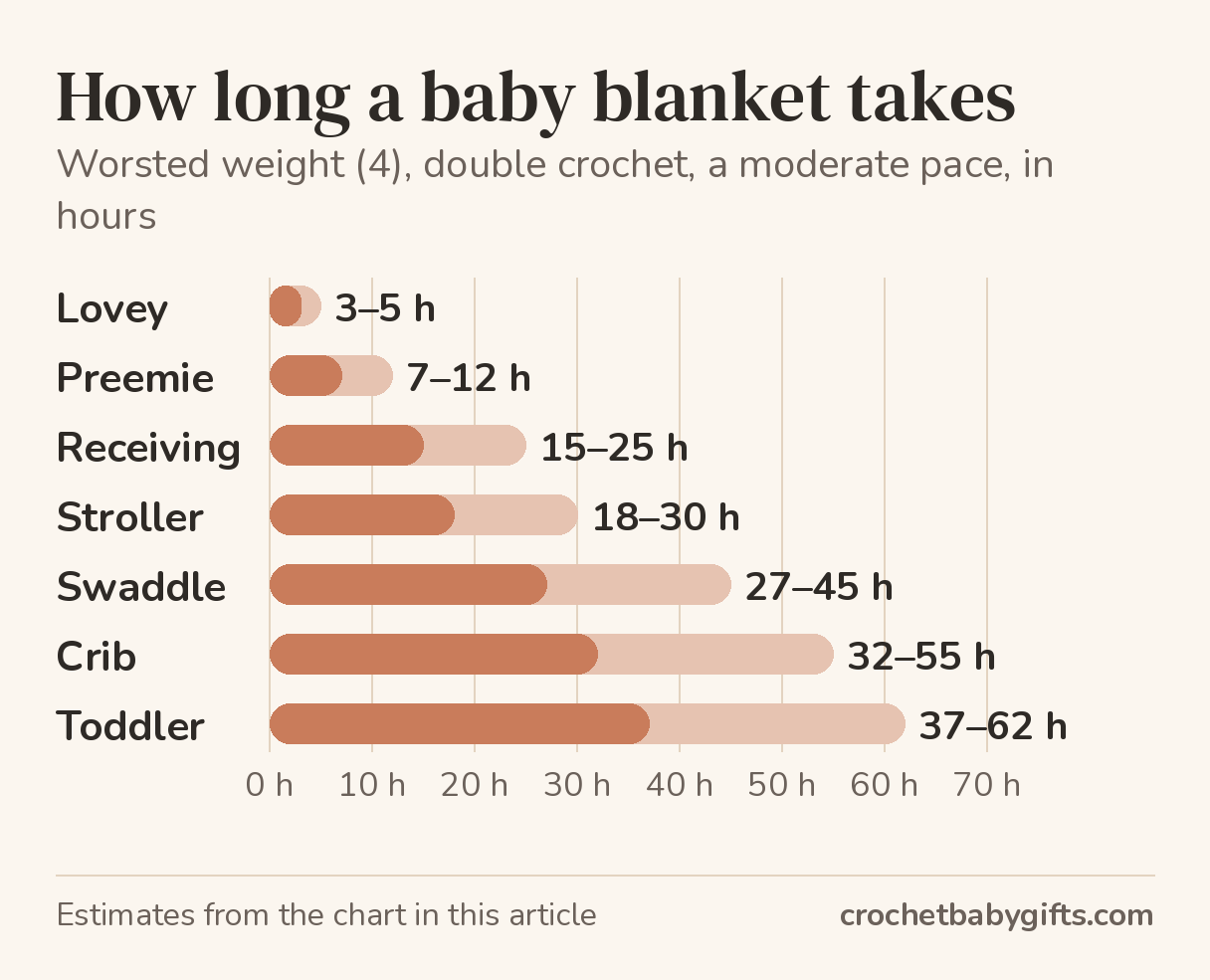
Add 2–5 hours for a border, and more for anything shell or ruffled. Add an hour for weaving in ends if you have used several colours.
How the stitch and yarn change it
Two multipliers, and they compound.
| Stitch | Time vs double crochet |
|---|---|
| Single crochet | ×1.8 — short stitches, far more of them |
| Half double crochet | ×1.3 |
| Double crochet | ×1 |
| Treble crochet | ×0.8 |
| Granny square / openwork | ×0.7 — fast, but joining squares adds it back |
| Bobble, puff, cable | ×1.5–2 |
| Yarn weight | Time vs worsted |
|---|---|
| Sport (2) | ×1.8 |
| DK (3) | ×1.4 |
| Worsted (4) | ×1 |
| Bulky (5) | ×0.6 |
| Super bulky (6) | ×0.4 |
Worked example. A 30 × 35 blanket in single crochet in DK: 24 hours (baseline) × 1.8 (single crochet) × 1.4 (DK) = about 60 hours. The same blanket in bulky double crochet is about 14. Identical dimensions, four times the work.
That factor of four is why “how long does a baby blanket take” has no single answer, and it is entirely within your control before you start.
Work out your own speed in ten minutes
Better than any table on the internet, including this one.
- Crochet for exactly 15 minutes in your chosen yarn, hook and stitch. Work naturally; do not race.
- Measure what you made. Multiply width × height for square inches.
- Square inches ÷ 0.25 = your square inches per hour.
- Blanket square inches ÷ that number = your hours.
Add about 15% — you will not sustain a 15-minute burst pace across 20 hours, and there are ends to weave and a border to add.
This gives you a number about your hands, which is the only number that matters for planning.
How far ahead of a due date to start
The honest version, because underestimating this is the classic mistake.
| You realistically crochet | Stroller blanket (24 h) | Crib blanket (44 h) |
|---|---|---|
| 1 hour a day | 4 weeks | 7 weeks |
| 1 hour, 3 days a week | 8 weeks | 15 weeks |
| Only weekends, 2 h each | 6 weeks | 11 weeks |
| Occasionally, ~1 h a week | 6 months | 10 months |
Start at least twice as early as the table says. Not because the estimate is wrong, but because life happens, you will run out of yarn once, and you may rip back a section. A blanket finished a month early is a pleasure; one finished three weeks after the shower is a slightly awkward second gift.
If a baby shower is under six weeks away and you have not started: make the lovey or the preemie size, or make a hat and booties instead. Those are three to five hours and they are finished. A finished small gift beats an unfinished blanket every time.
Ways to genuinely go faster
- Go up a yarn weight. Bulky roughly halves the time. This is by far the largest lever.
- Use taller stitches. Double or treble rather than single.
- Pick a bigger hook within the yarn’s range — a looser fabric covers more ground and drapes better.
- Avoid colour changes. Every one is a tail to weave in.
- Choose a border you actually like doing, because you will do it around the whole perimeter.
And one that is not worth it: granny squares look fast and are not. The squares fly by; joining forty of them and weaving in eighty ends does not. They are a good choice for portability and a poor one for speed.
What most estimates get wrong
They give one number with no stitch or yarn weight attached, which as the worked example shows can be off by a factor of four.
They quote the maker’s own speed as though it were general. Experienced crocheters are genuinely two to three times faster than beginners at the same stitch, and blog authors are experienced crocheters.
They omit finishing. The border, the ends, and blocking are real hours and they land at the end, when the deadline is closest.
Frequently asked questions
How long does a baby blanket take for a beginner? Roughly double the table above for a first project. You will also spend time undoing things, which is normal and not wasted.
What is the fastest baby blanket to crochet? Bulky yarn, large hook, double crochet, no colour changes, simple border. A 30 × 35 comes in around 12–15 hours. Avoid super bulky for anything a baby sleeps near — the gaps are large enough for a hand or foot.
Can I crochet a baby blanket in a weekend? A lovey, yes. A stroller blanket only in bulky yarn with two long days. A crib blanket, no.
How many hours a day should I crochet? An hour is sustainable for most people. Beyond about two hours in a sitting, hands and wrists start to complain — and repetitive strain is a real thing in this craft. Take breaks.
Is it quicker to knit or crochet a blanket? Crochet, generally — taller stitches cover ground faster. See crochet or knit.